
Cosmetic · Lipopeptide
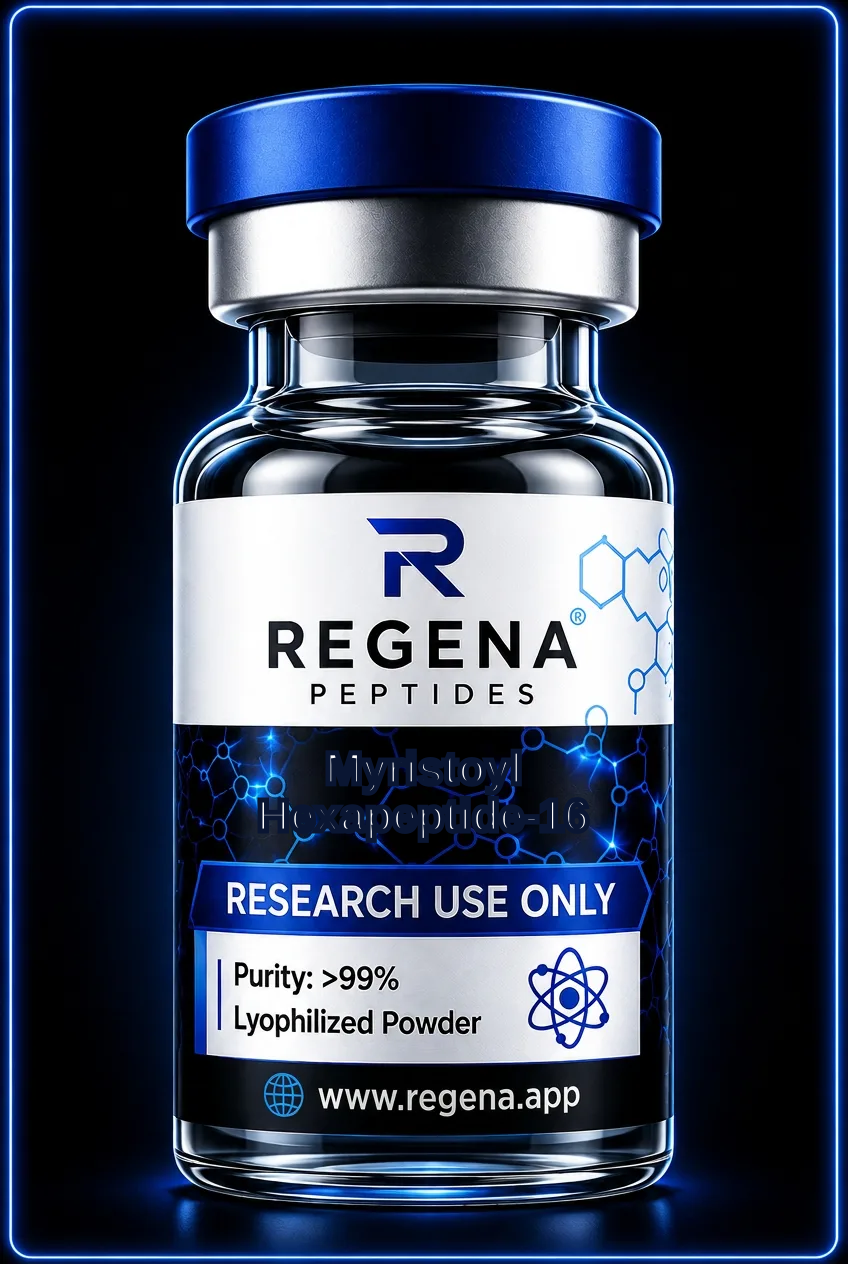
Myristoyl Hexapeptide-16
A synthetic lipopeptide used in laboratory models to study keratin gene expression and epithelial cell biology.
- Length
- 6 amino acids
- Half-life
- Not well characterised
- Mechanism
- It is reported to upregulate the gene encoding keratin, a key structural protein in epithelial cells.
- Studied in
- In vitro studies using human keratinocyte cultures investigate its effects on gene expression and cellular differentiation.
About Myristoyl Hexapeptide-16
Myristoyl Hexapeptide-16 is a synthetic peptide consisting of six amino acids (Val-Gly-Val-Ala-Pro-Gly) conjugated to myristic acid. This lipophilic fatty acid tail is intended to enhance its association with cellular structures in experimental models. The peptide's sequence is derived from keratin proteins.
Laboratory research focuses on its influence on keratinocyte gene expression, particularly the genes responsible for producing various keratins. In vitro models, such as monolayer cell cultures or 3D skin equivalents, are employed to quantify changes in mRNA and protein levels following exposure to the peptide. These studies aim to understand the molecular pathways governing epidermal structure and function.
Laboratory notes
- Solubility is enhanced in mild aqueous buffer systems containing a small percentage of organic co-solvent like DMSO.
- Due to the myristoyl group, solutions may appear slightly hazy; brief sonication can improve homogeneity for assays.
- Store lyophilised powder at -20°C and reconstituted solutions at 2-8°C for short-term use, avoiding multiple freeze-thaw cycles.
Storage and reconstitution basics: storage guide.
Questions about Myristoyl Hexapeptide-16
What is the function of the myristoyl group?
The myristoyl group is a C14 saturated fatty acid attached to the peptide to increase its lipophilicity, which may influence its interaction with lipid-based structures in in vitro systems.
What is the amino acid sequence of this peptide?
The amino acid sequence is Valyl-glycyl-valyl-alanyl-prolyl-glycine (VGVAPG).
What type of cells are typically used to study this peptide?
Research models commonly employ human keratinocytes or reconstructed epidermal tissue to investigate its biological activity on keratin expression.
Is Myristoyl Hexapeptide-16 for human use?
No. It is supplied strictly for in-vitro laboratory research and is not for human or animal consumption.
Related research peptides
All products are sold for laboratory research use only. Not for human consumption, not a medicine, not for diagnosing, treating or preventing any condition.