
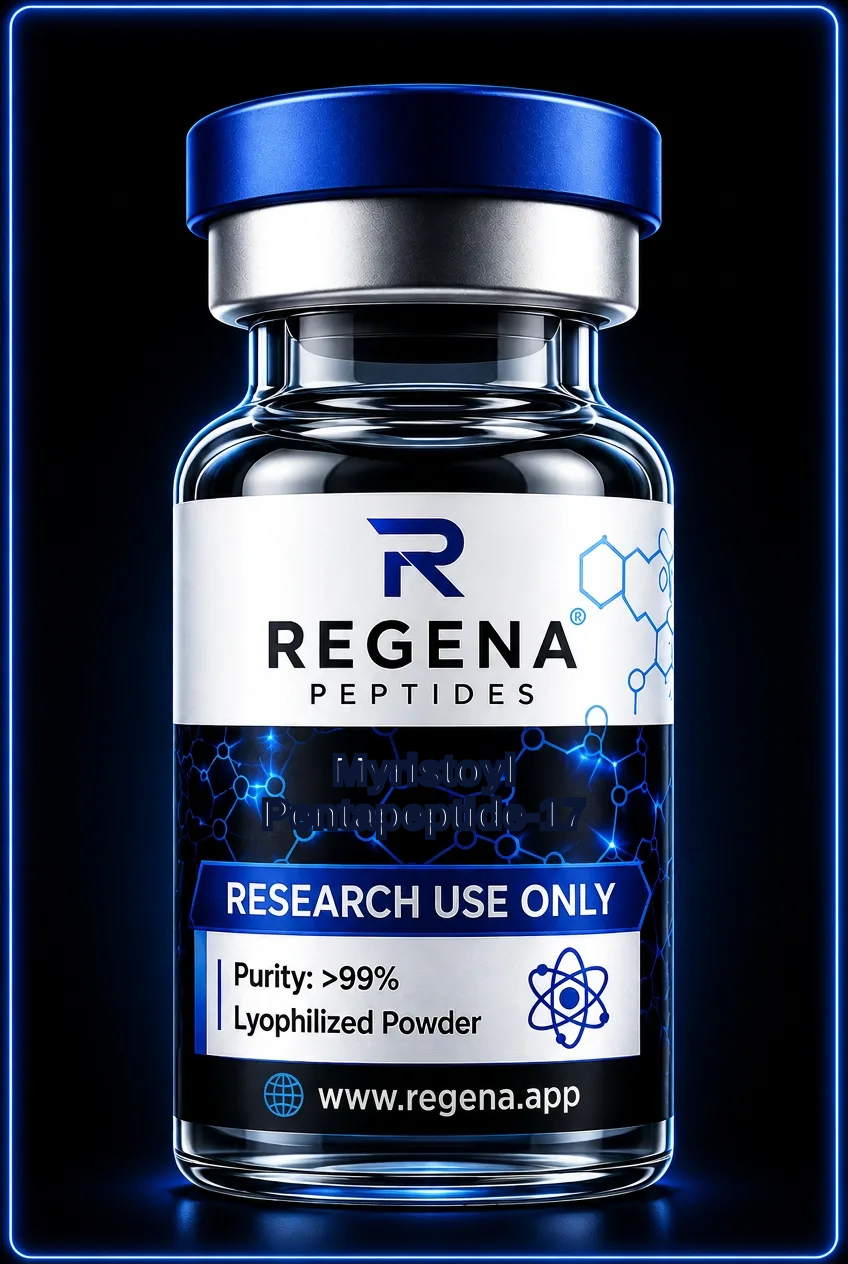
Cosmetic · Lipopeptide
Myristoyl Pentapeptide-17
A synthetic lipopeptide investigated in vitro for its ability to stimulate the expression of keratin genes in cells derived from hair follicles.
- Length
- 5 amino acids (plus myristoyl group)
- Half-life
- Not well characterised
- Mechanism
- This lipopeptide is studied for its ability to stimulate the expression of keratin genes in vitro, particularly those associated with hair follicles and eyelashes.
- Studied in
- In vitro studies using human follicle dermal papilla cells or keratinocyte cultures are used to investigate its effect on keratin gene upregulation.
About Myristoyl Pentapeptide-17
Myristoyl Pentapeptide-17 is a synthetic lipopeptide that consists of a five-amino-acid chain attached to a myristoyl group. The myristoyl group is a 14-carbon saturated fatty acid, which, similar to palmitoyl groups, increases the molecule's lipophilicity and stability for experimental applications. The peptide sequence is Lys-Leu-Ala-Lys-Lys.
Research on this peptide focuses on its effects on keratin expression. Keratins are the primary structural proteins that make up hair and the epidermis. In laboratory settings, Myristoyl Pentapeptide-17 is applied to cell cultures, such as human follicle dermal papilla cells or keratinocytes, to assess its ability to stimulate the genes responsible for producing various types of keratin. The outcome is typically measured by quantifying changes in keratin mRNA or protein levels.
Laboratory notes
- The peptide sequence is Myristoyl-Lys-Leu-Ala-Lys-Lys.
- The myristoyl group is a C14 fatty acid, slightly shorter than the C16 palmitoyl group found on other cosmetic peptides.
- Research often uses qPCR to quantify the expression levels of specific keratin genes (e.g., KRT31, KRT85) in treated cell cultures.
Storage and reconstitution basics: storage guide.
Questions about Myristoyl Pentapeptide-17
What is the function of keratin?
Keratins are a family of fibrous structural proteins. They are the key material making up hair, feathers, horns, claws, and the outer layer of the skin in vertebrates.
What is the difference between a myristoyl and a palmitoyl group?
Both are saturated fatty acids used to increase a peptide's lipophilicity. The only difference is chain length: myristic acid has 14 carbons, while palmitic acid has 16 carbons.
What kind of cells are used to study this peptide?
Commonly used in vitro models include primary human follicle dermal papilla cells (HFDPC) or immortalized human keratinocyte cell lines (e.g., HaCaT).
Is Myristoyl Pentapeptide-17 for human use?
No. It is supplied strictly for in-vitro laboratory research and is not for human or animal consumption.
Related research peptides
All products are sold for laboratory research use only. Not for human consumption, not a medicine, not for diagnosing, treating or preventing any condition.