
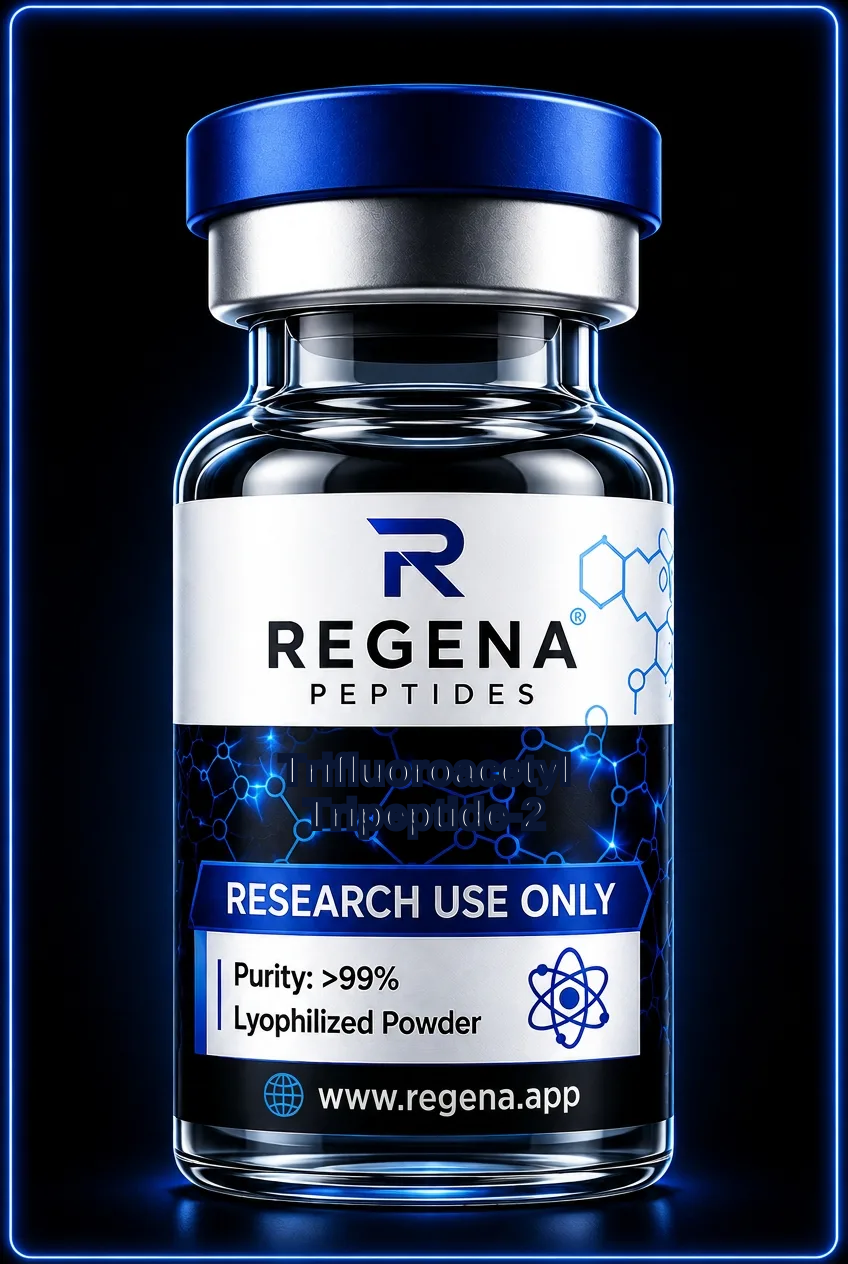
Cosmetic · N-acylated Tripeptide
Trifluoroacetyl Tripeptide-2
Also known as TFA-Val-Tyr-Val
A tripeptide that inhibits progerin synthesis, used in lab models to study cellular senescence and nuclear lamina integrity.
- Length
- 3 amino acids
- Half-life
- Not well characterised
- Mechanism
- This peptide acts as an inhibitor of progerin synthesis by modulating enzymes in the post-translational processing pathway of lamin A.
- Studied in
- It is used in cellular models of senescence to study its effects on nuclear architecture, DNA repair mechanisms, and the expression of senescence-associated markers.
About Trifluoroacetyl Tripeptide-2
Trifluoroacetyl Tripeptide-2 is a synthetic tripeptide (Val-Tyr-Val) modified with an N-terminal trifluoroacetyl group. This modification enhances its lipophilicity and stability. The peptide is specifically designed to interfere with the production of progerin, a truncated and farnesylated form of the nuclear protein lamin A.
Research applications for this compound are centered on cellular senescence. In vitro studies using senescent fibroblast models investigate the peptide's ability to reduce progerin levels and mitigate associated nuclear abnormalities, such as nuclear blebbing. Its effects on senescence-associated beta-galactosidase activity and matrix metalloproteinase (MMP) production are also common areas of investigation.
Laboratory notes
- The trifluoroacetyl group significantly increases hydrophobicity; ensure use of an appropriate solvent like DMSO for the stock solution before further dilution in aqueous media.
- Western blotting for progerin and lamin A/C is the standard method to confirm the peptide's mechanism of action in cell lysates.
- Quantification of nuclear morphology changes (e.g., area, circularity) via fluorescence microscopy of lamin-stained nuclei is a key experimental endpoint.
Storage and reconstitution basics: storage guide.
Questions about Trifluoroacetyl Tripeptide-2
What is progerin, the target of this peptide?
Progerin is a toxic, mutated form of lamin A, a protein that provides structural support to the cell nucleus. The accumulation of progerin is a hallmark of certain cellular senescence models.
What is the role of the trifluoroacetyl modification?
The trifluoroacetyl group increases the peptide's stability against enzymatic degradation and its lipophilicity, which may facilitate its passage across cell membranes in experimental settings.
What kind of cells are used to study this peptide?
Human dermal fibroblasts, often induced into a state of senescence through replicative exhaustion or chemical treatment, are a common model system for studying the effects of this peptide.
Is Trifluoroacetyl Tripeptide-2 for human use?
No. It is supplied strictly for in-vitro laboratory research and is not for human or animal consumption.
Related research peptides
All products are sold for laboratory research use only. Not for human consumption, not a medicine, not for diagnosing, treating or preventing any condition.