
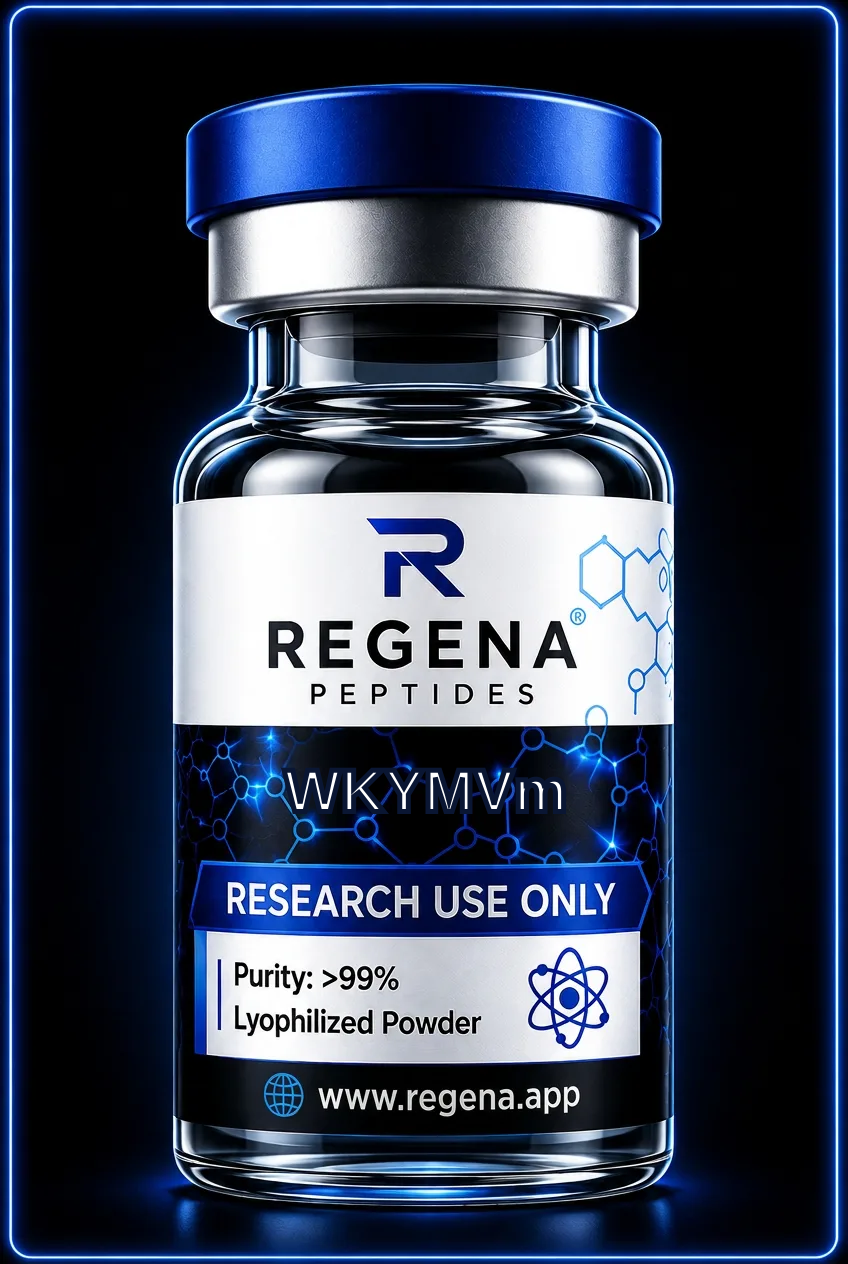
Immune · Synthetic formyl peptide receptor agonist
WKYMVm
Also known as Trp-Lys-Tyr-Met-Val-D-Met; W peptide
A synthetic hexapeptide containing terminal D-methionine, widely used as a formyl peptide receptor signalling probe.
- Length
- 6 amino acids
- Half-life
- Not well characterised
- Mechanism
- WKYMVm activates formyl peptide receptors, usually showing strong activity at FPR2/ALX while also activating other family members in suitable assay systems. Receptor engagement couples predominantly to Gi proteins, initiating calcium mobilisation and downstream chemotactic signalling.
- Studied in
- Receptor-transfected cell lines, isolated leukocytes and animal inflammation models use WKYMVm to investigate FPR-dependent signalling, migration and innate immune responses.
About WKYMVm
WKYMVm is a synthetic hexapeptide identified through peptide-library screening for leukocyte-stimulating activity. The uppercase letters denote L-amino acids, whereas the final lowercase m denotes D-methionine. Commonly studied material has the sequence Trp-Lys-Tyr-Met-Val-D-Met with a C-terminal amide. Unlike classical bacterial formyl peptides, it does not require an N-formyl group to activate formyl peptide receptors. Its compact sequence makes stereochemistry and terminal modification particularly important for reagent matching.
FPR2/ALX is a prominent target of WKYMVm, although activity at FPR1 and FPR3 has also been described under particular experimental conditions. Investigators use receptor-expressing cell systems to measure calcium flux, G protein coupling, receptor internalisation and signalling bias. Leukocyte studies additionally examine chemotaxis, degranulation and oxidative burst. Receptor abundance and species-specific pharmacology can alter apparent selectivity, so the peptide is not an unconditional FPR2-specific control.
Laboratory notes
- Verify the terminal D-methionine and C-terminal chemistry; all-L analogues and differently capped peptides are not interchangeable controls.
- Monitor methionine oxidation during storage and sample preparation, as oxidation can change the reagent's analytical profile and activity.
- Include receptor-negative cells and appropriate receptor-blocking controls when assigning calcium-flux or chemotaxis responses.
Storage and reconstitution basics: storage guide.
Questions about WKYMVm
What does the lowercase m mean?
It identifies D-methionine at the final position, distinguishing it from the L-methionine represented by uppercase M.
Is WKYMVm an N-formylated peptide?
No. Its name reflects the amino acid sequence, and its receptor activity does not require the N-formyl group found in classical formyl peptide ligands.
Can it establish FPR2 involvement on its own?
No. Research-use experiments should include receptor-specific controls because other formyl peptide receptors can respond in some systems.
Is WKYMVm for human use?
No. It is supplied strictly for in-vitro laboratory research and is not for human or animal consumption.
Related research peptides
All products are sold for laboratory research use only. Not for human consumption, not a medicine, not for diagnosing, treating or preventing any condition.