
Cosmetic · Lipopeptide
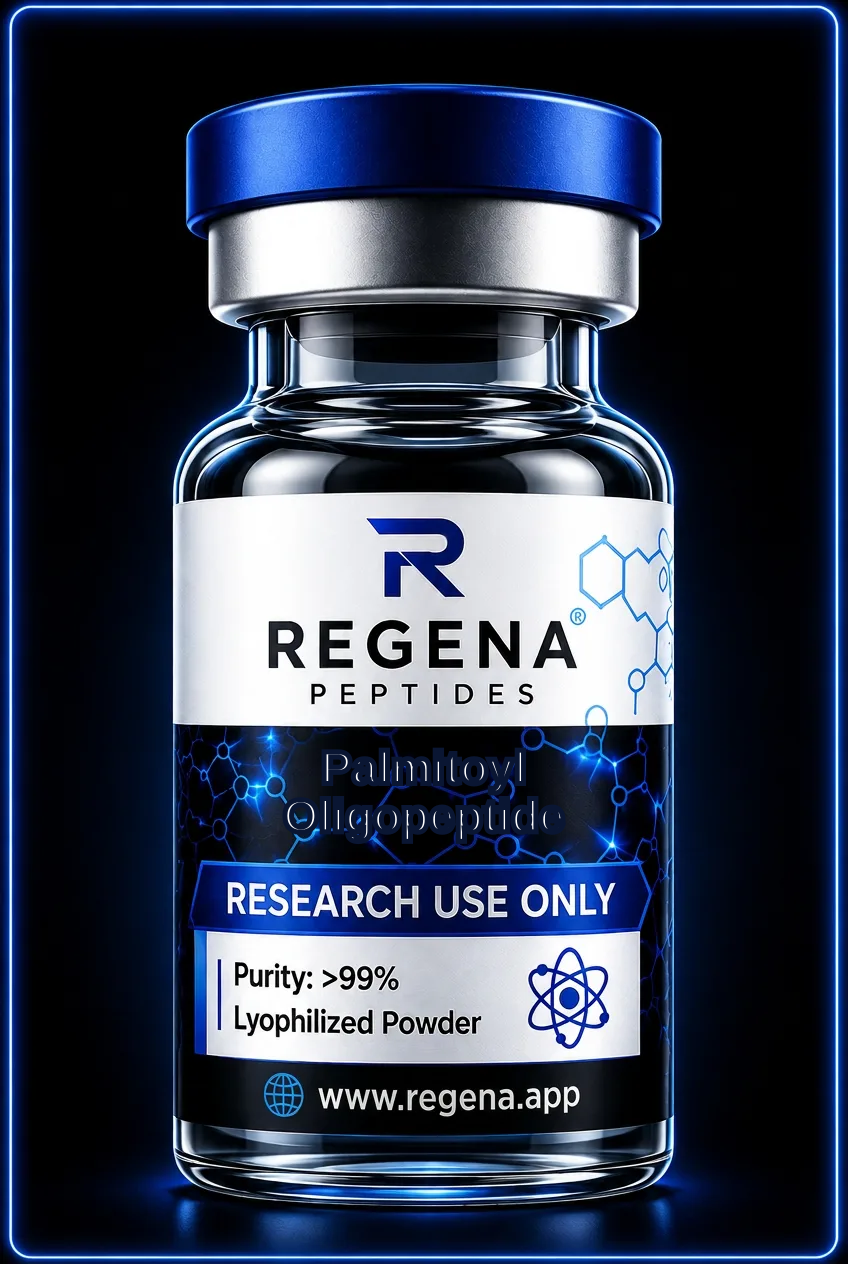
Palmitoyl Oligopeptide
Also known as Palmitoyl Hexapeptide-12, Pal-VGVAPG
A palmitoylated elastin fragment (VGVAPG) studied in vitro for its chemotactic effects on fibroblasts and its role in stimulating ECM synthesis.
- Length
- 6 amino acids
- Half-life
- Not well characterised
- Mechanism
- This lipopeptide fragment of elastin acts as a chemotactic agent for fibroblasts, stimulating their migration and proliferation in vitro.
- Studied in
- Used in fibroblast cell culture to investigate its effects on the synthesis of extracellular matrix components, primarily elastin and collagen.
About Palmitoyl Oligopeptide
Palmitoyl Oligopeptide consists of the hexapeptide sequence Val-Gly-Val-Ala-Pro-Gly (VGVAPG) linked to palmitic acid. This sequence is a repeating motif found in tropoelastin, the soluble precursor to elastin. The conjugation with palmitic acid increases the peptide's lipophilicity, enhancing its stability and interaction with cell membranes in experimental systems.
This compound is a standard reagent in cell biology for studying cell migration and extracellular matrix (ECM) production. It is known to act as a chemotactic signal for fibroblasts, attracting them to a specific site in culture. Subsequent studies often quantify the peptide's effect on fibroblast proliferation and the synthesis of key ECM proteins, such as collagen and elastin.
Laboratory notes
- Also referred to as Palmitoyl Hexapeptide-12 in cosmetic ingredient databases.
- The VGVAPG peptide sequence is a well-characterised fragment of the elastin protein.
- Its chemotactic properties for fibroblasts can be quantified using a Boyden chamber assay.
Storage and reconstitution basics: storage guide.
Questions about Palmitoyl Oligopeptide
What is the origin of the peptide sequence in Palmitoyl Oligopeptide?
The peptide sequence, Val-Gly-Val-Ala-Pro-Gly (VGVAPG), is a repeating fragment derived from elastin, a major protein in the extracellular matrix.
What does 'chemotactic' mean in this context?
In cell culture, a chemotactic agent is a substance that stimulates the directional movement of cells, such as fibroblasts, along a concentration gradient. This is a key process in tissue modeling.
How does this peptide differ from Palmitoyl Tripeptide-38?
While both are palmitoylated peptides studied for ECM synthesis, Palmitoyl Oligopeptide is an elastin fragment studied for fibroblast chemotaxis, while Palmitoyl Tripeptide-38 is a collagen/laminin fragment studied for broad ECM component upregulation.
Is Palmitoyl Oligopeptide for human use?
No. It is supplied strictly for in-vitro laboratory research and is not for human or animal consumption.
Related research peptides
All products are sold for laboratory research use only. Not for human consumption, not a medicine, not for diagnosing, treating or preventing any condition.