
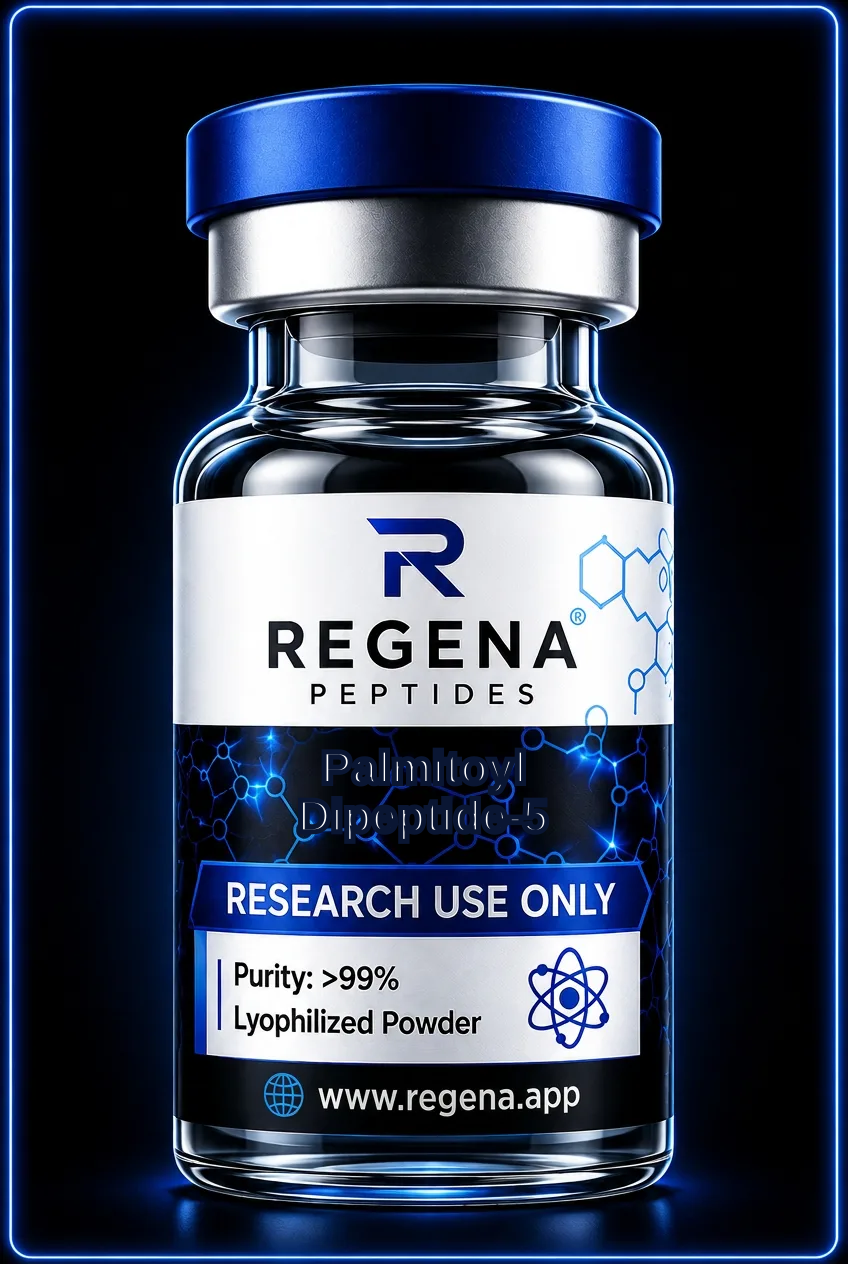
Cosmetic · Lipopeptide
Palmitoyl Dipeptide-5
Also known as Palmitoyl Dipeptide-5 Diaminobutyroyl Hydroxythreonine, Palmitoyl Dipeptide-5 Diaminohydroxybutyrate
A synthetic lipopeptide designed to interact with proteins of the dermal-epidermal junction, used in in vitro skin models to study structural integrity.
- Length
- 2 amino acids
- Half-life
- Not well characterised
- Mechanism
- This peptide is engineered to interact with laminin V, a key protein in the dermal-epidermal junction (DEJ), within in vitro skin models.
- Studied in
- It is evaluated in cell culture systems and ex vivo skin models to study its impact on the integrity and function of the dermal-epidermal junction.
About Palmitoyl Dipeptide-5
Palmitoyl Dipeptide-5 is a small synthetic lipopeptide consisting of a dipeptide sequence linked to a palmitoyl group, which improves its lipid solubility. Different commercial versions exist with slight structural variations, such as the inclusion of diaminobutyroyl hydroxythreonine or diaminohydroxybutyrate as linkers.
The primary application for this peptide is in laboratory research involving skin models. Investigators use it in co-cultures of keratinocytes and fibroblasts or in ex vivo skin explants to assess its effects on the structure and protein expression at the dermal-epidermal junction, particularly its interaction with proteins like laminin V.
Laboratory notes
- Due to its lipophilic nature, initial solubilisation in an organic solvent like DMSO is often required before dilution in aqueous buffers.
- Several structurally distinct molecules are marketed under similar names; verify the exact structure for your research needs.
- For cell culture experiments, the final concentration of the organic solvent should be kept low (<0.1%) and included in control conditions.
Storage and reconstitution basics: storage guide.
Questions about Palmitoyl Dipeptide-5
What is the dermal-epidermal junction (DEJ)?
The DEJ is a specialized basement membrane zone that connects the epidermis to the underlying dermis in the skin.
Why is this peptide 'palmitoylated'?
The addition of the palmitoyl fatty acid group makes the peptide more lipophilic, intended to modify its behavior in experimental systems by improving its association with cell membranes.
Are all 'Palmitoyl Dipeptide-5' molecules the same?
No, this name can refer to several different molecules with variations in their linker or amino acid components. It is important to confirm the exact chemical structure.
Is Palmitoyl Dipeptide-5 for human use?
No. It is supplied strictly for in-vitro laboratory research and is not for human or animal consumption.
Related research peptides
All products are sold for laboratory research use only. Not for human consumption, not a medicine, not for diagnosing, treating or preventing any condition.