
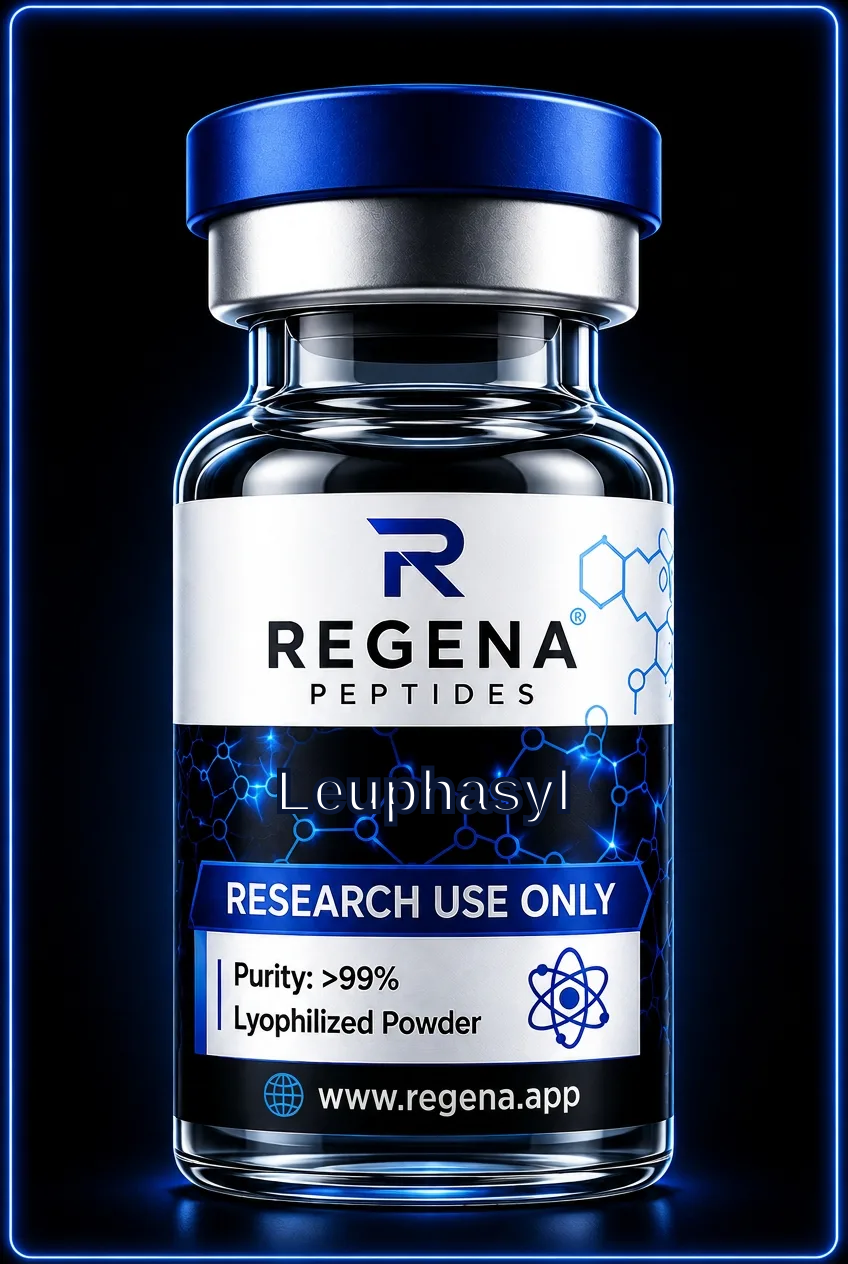
Cosmetic · Neuropeptide Analogue
Leuphasyl (Pentapeptide-18)
Also known as Pentapeptide-18
A synthetic pentapeptide that mimics enkephalins, researched for its ability to reduce neuronal excitability and neurotransmitter release in vitro.
- Length
- 5 amino acids
- Half-life
- Not well characterised
- Mechanism
- It mimics the action of enkephalins by binding to enkephalin receptors on neurons, leading to a decrease in neuronal excitability and subsequent acetylcholine release.
- Studied in
- Laboratory studies on neuronal cell cultures investigate its ability to modulate calcium influx and inhibit neurotransmitter release, often in synergy with SNARE-disrupting peptides.
About Leuphasyl (Pentapeptide-18)
Pentapeptide-18 is a synthetic five-amino-acid peptide with the sequence Tyr-D-Ala-Gly-Phe-Leu. This sequence is a modified analogue of the endogenous opioid peptides known as enkephalins. The inclusion of a D-alanine residue instead of the natural L-alanine is a common strategy in peptide design to increase resistance to enzymatic degradation.
The peptide's mechanism of action is studied for its ability to mimic enkephalins. It binds to enkephalin receptors on the outside of nerve cells, which leads to a cascade that downregulates their activity. This reduced neuronal excitability results in a diminished release of the neurotransmitter acetylcholine at the synapse in vitro. Researchers often study this peptide in combination with SNARE-complex inhibitors like Acetyl Hexapeptide-3 to investigate potential synergistic effects.
Laboratory notes
- The peptide sequence is Tyr-D-Ala-Gly-Phe-Leu.
- The D-alanine at position 2 is critical for its stability against degradation by aminopeptidases.
- In vitro studies often combine Pentapeptide-18 with a SNARE-complex inhibitor to demonstrate a dual-pathway approach to modulating neurotransmitter release.
Storage and reconstitution basics: storage guide.
Questions about Leuphasyl (Pentapeptide-18)
What are enkephalins?
Enkephalins are small, endogenous opioid peptides that are involved in regulating nociception and other neural functions by binding to opioid receptors.
How does Pentapeptide-18's mechanism differ from that of Argireline?
Pentapeptide-18 works pre-synaptically by binding to neuron receptors to reduce cell excitability. In contrast, Argireline (Acetyl Hexapeptide-3) works directly at the synaptic machinery by interfering with the SNARE complex. They target different steps in the process of neurotransmitter release.
What is the significance of the D-alanine in its structure?
Natural peptides are made of L-amino acids. Replacing the L-alanine with a D-alanine makes the peptide less recognizable to enzymes that would normally break it down, thereby increasing its stability in experimental systems.
Is Leuphasyl (Pentapeptide-18) for human use?
No. It is supplied strictly for in-vitro laboratory research and is not for human or animal consumption.
Related research peptides
All products are sold for laboratory research use only. Not for human consumption, not a medicine, not for diagnosing, treating or preventing any condition.