
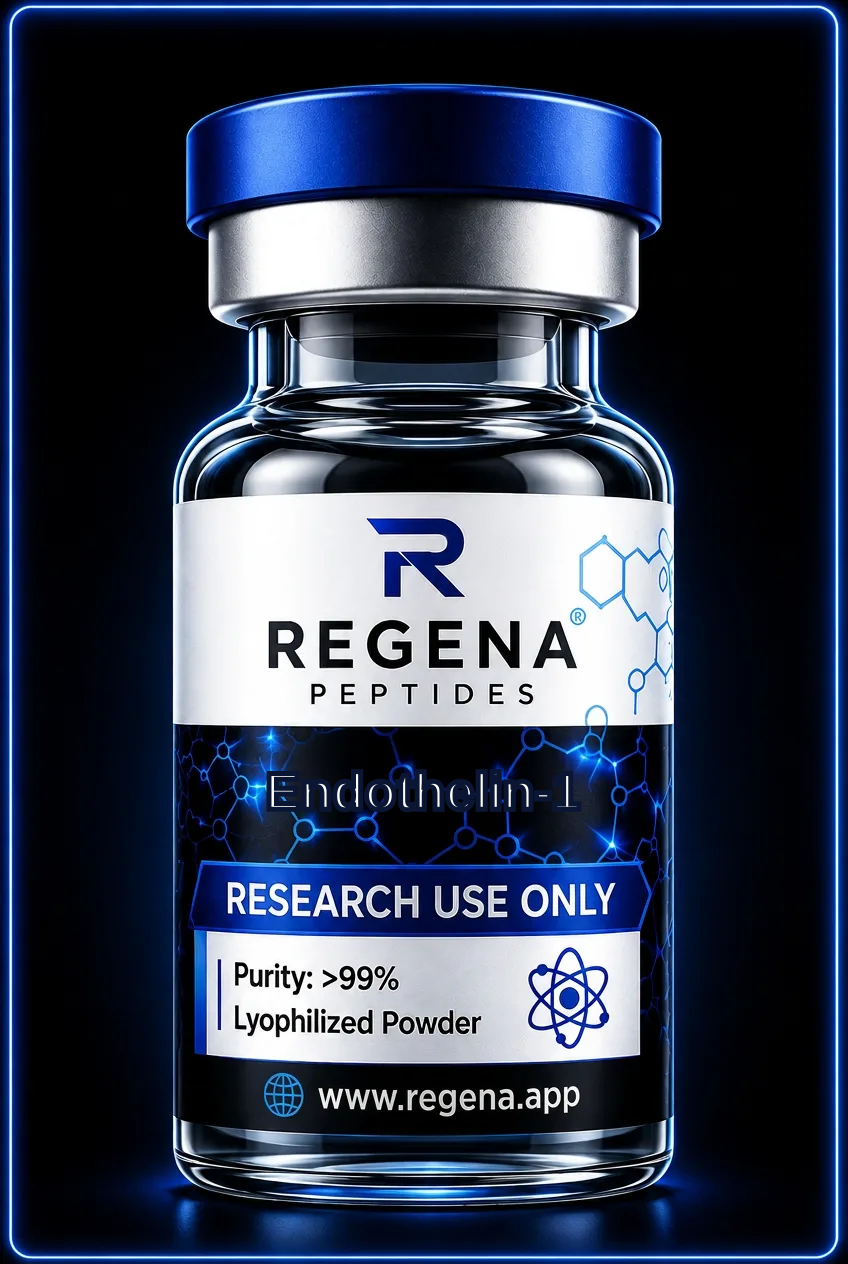
Cardiovascular · Vasoconstrictor Peptide
Endothelin-1
Also known as ET-1
A 21-amino-acid peptide and potent vasoconstrictor that activates ETA and ETB receptors, used in laboratory models of hypertension and fibrosis.
- Length
- 21 amino acids
- Half-life
- Approx. 1-2 minutes (plasma); minutes to hours (tissue-bound)
- Mechanism
- Endothelin-1 acts on G protein-coupled endothelin receptors (ETA and ETB) to induce potent and long-lasting vasoconstriction and cell proliferation.
- Studied in
- Laboratory studies utilize ET-1 to induce vasoconstriction in isolated vessel preparations and investigate its role in models of hypertension, fibrosis, and inflammation.
About Endothelin-1
Endothelin-1 (ET-1) is a 21-amino-acid peptide produced primarily by vascular endothelial cells. It is one of the most potent endogenous vasoconstrictors known. The structure features two crucial disulfide bonds that are essential for its biological activity.
ET-1 exerts its effects by binding to two G protein-coupled receptor subtypes: the endothelin A (ETA) receptor, found on vascular smooth muscle cells, and the endothelin B (ETB) receptor. Activation of ETA receptors mediates vasoconstriction and cell proliferation, while ETB receptor effects are more complex, including transient vasodilation or vasoconstriction. Due to its potent biological activity, ET-1 is a standard tool in cardiovascular research to study vascular tone and cellular signaling pathways.
Laboratory notes
- ET-1 is extremely potent; use micromolar to nanomolar concentrations in most cell and tissue assays. Perform dilution series carefully.
- The peptide is hydrophobic and can adhere to plasticware. Pre-rinsing pipette tips and tubes with buffer containing a carrier protein like BSA (0.1%) is recommended.
- Due to its two disulfide bonds, ensure proper folding by reconstituting gently in a suitable buffer and avoid harsh vortexing.
Storage and reconstitution basics: storage guide.
Questions about Endothelin-1
What are the primary receptors for Endothelin-1?
ET-1 binds to two main receptor subtypes, Endothelin A (ETA) and Endothelin B (ETB), which mediate its diverse effects.
Why is ET-1's effect so long-lasting in tissue models?
The long duration of action is attributed to slow dissociation from its receptors and sequestration in the extracellular matrix, leading to sustained signaling.
How should I handle ET-1 in the lab?
ET-1 is a highly potent vasoconstrictor. Appropriate personal protective equipment (PPE) including gloves and eye protection should be used. Prepare stock solutions and dilutions in a controlled environment like a fume hood.
Is Endothelin-1 for human use?
No. It is supplied strictly for in-vitro laboratory research and is not for human or animal consumption.
Related research peptides
All products are sold for laboratory research use only. Not for human consumption, not a medicine, not for diagnosing, treating or preventing any condition.