
Cosmetic · Lipo-peptide
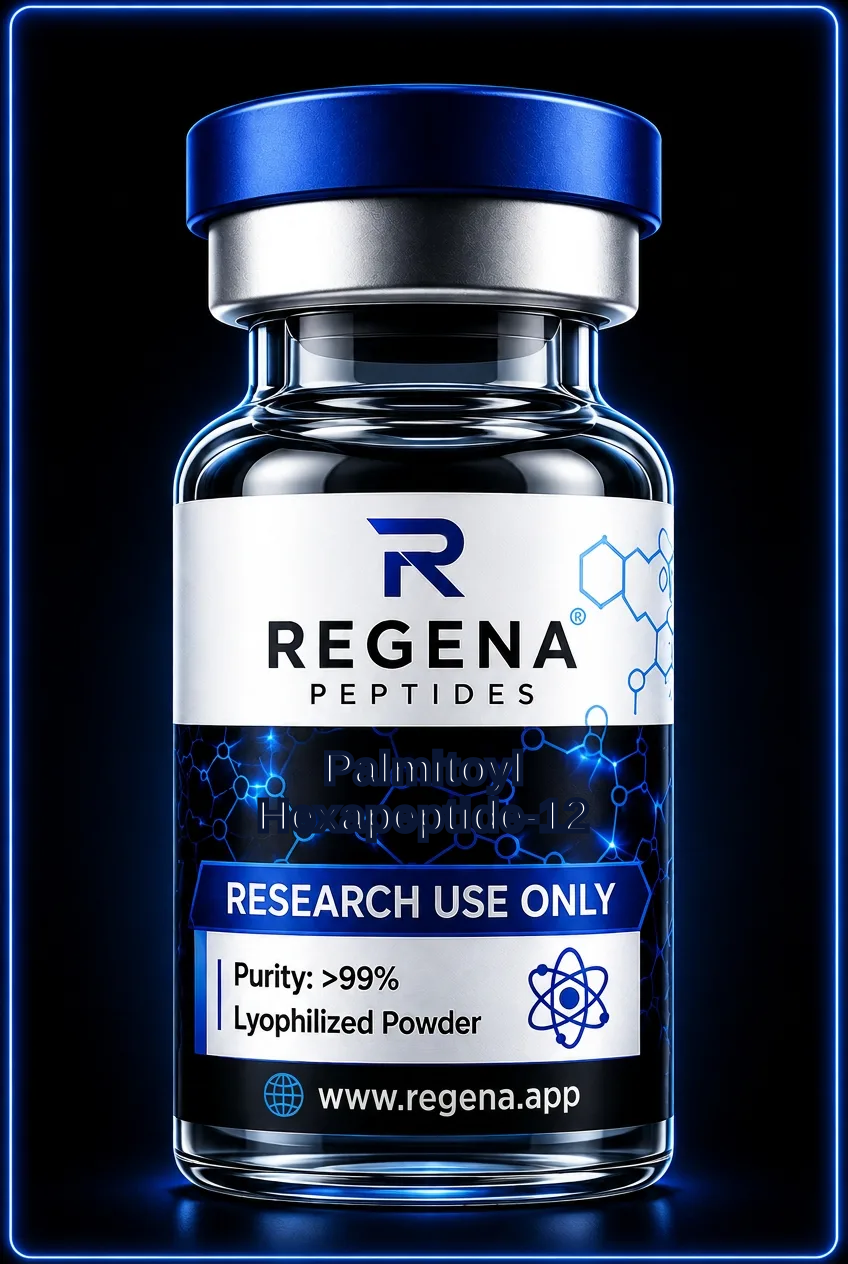
Palmitoyl Hexapeptide-12
Also known as Biopeptide EL
A palmitoylated hexapeptide studied for its chemotactic effect on fibroblasts and its role in stimulating ECM protein synthesis in vitro.
- Length
- 6 amino acids
- Half-life
- Not well characterised
- Mechanism
- It functions as a chemoattractant for fibroblasts and is studied for its ability to stimulate synthesis of extracellular matrix proteins.
- Studied in
- In vitro studies using human dermal fibroblasts examine its effect on the production of collagen, elastin, and fibronectin.
About Palmitoyl Hexapeptide-12
Palmitoyl Hexapeptide-12 is a lipo-peptide created by attaching palmitic acid to the N-terminus of the hexapeptide sequence Val-Gly-Val-Ala-Pro-Gly (VGVAPG). This sequence is a repeated fragment found within the protein elastin. The addition of the palmitoyl group increases the peptide's lipophilicity, a characteristic studied for its influence on peptide stability in experimental formulations.
Research applications for this peptide focus on its biological activity in dermal cell cultures. It has been documented to act as a chemotactic agent, stimulating the migration of fibroblasts in Boyden chamber assays. Furthermore, it is used to investigate the upregulation of extracellular matrix (ECM) components, with studies measuring its effect on the synthesis of elastin, fibronectin, and collagen by cultured fibroblasts.
Laboratory notes
- This lipo-peptide has poor solubility in water; it is typically dissolved in an oil phase or with the help of a solubilizer for experimental formulations.
- Store the lyophilised powder in a desiccated environment at -20°C.
- Its effect on ECM synthesis can be quantified using techniques like ELISA for protein levels or qRT-PCR for gene expression.
Storage and reconstitution basics: storage guide.
Questions about Palmitoyl Hexapeptide-12
What is the significance of the VGVAPG sequence?
The Val-Gly-Val-Ala-Pro-Gly sequence is a repeating motif in elastin, a key protein of the extracellular matrix. Peptides containing this sequence are studied for their interactions with fibroblasts.
Why is it attached to palmitic acid?
The palmitoyl group is a fatty acid that makes the peptide lipophilic. This modification is explored in cosmetic science research for its potential effects on peptide stability in topical formulation models.
What is the primary use for this product?
It is a cosmetic ingredient used for research and development purposes, primarily in in vitro studies on dermal fibroblasts to examine its effects on cell migration and matrix protein production.
Is Palmitoyl Hexapeptide-12 for human use?
No. It is supplied strictly for in-vitro laboratory research and is not for human or animal consumption.
Related research peptides
All products are sold for laboratory research use only. Not for human consumption, not a medicine, not for diagnosing, treating or preventing any condition.