
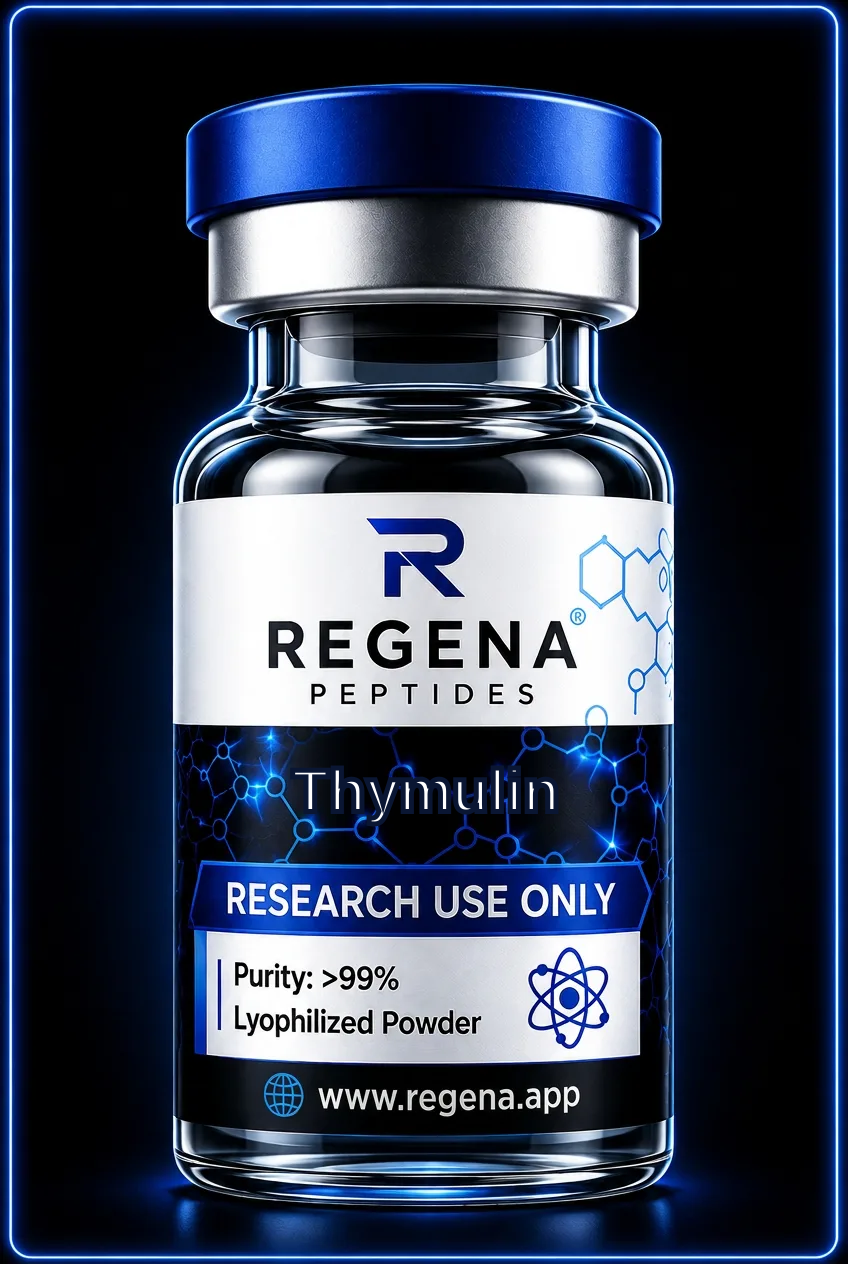
Immune · Thymic nonapeptide
Thymulin
Also known as Thymic Factor, FTS
A zinc-dependent nonapeptide from the thymus gland studied in immunological research for its role in T-cell modulation.
- Length
- 9 amino acids
- Half-life
- A few minutes in plasma
- Mechanism
- Modulates T-cell differentiation and function through its interaction with specific lymphocyte receptors, with its biological activity being strictly dependent on the presence of zinc.
- Studied in
- Employed in immunological studies to examine its effects on T-lymphocyte markers, cytokine production, and immune cell proliferation in various cell culture and animal models.
About Thymulin
Thymulin is a nonapeptide produced by the epithelial cells of the thymus gland. Its primary structure consists of nine amino acids, and it circulates in the bloodstream. The peptide's biological activity is critically dependent on its equimolar binding to a zinc ion, forming the active metallopeptide complex often referred to as Zinc-Thymulin.
The molecule acts on the immune system, particularly on the T-lymphocyte population. Research investigates its role in T-cell differentiation, the enhancement of T-cell suppressor function, and the modulation of cytokine expression. Due to its specific action on immune cells, it is a tool for in vitro and in vivo studies of immunomodulation.
Laboratory notes
- The biological activity of Thymulin is strictly zinc-dependent; researchers often add zinc chloride to experimental buffers in a 1:1 molar ratio.
- Its very short plasma half-life is a key consideration in the design of in vivo experimental protocols.
- Thymulin should not be confused with Thymosin Alpha 1 or Thymalin, which are distinct thymic peptides with different structures and functions.
Storage and reconstitution basics: storage guide.
Questions about Thymulin
Is zinc required for in vitro experiments?
Yes, for assays measuring biological activity, such as lymphocyte receptor binding or functional responses, the presence of zinc in a 1:1 molar ratio with the peptide is essential.
What is the difference between Thymulin and Thymosin Alpha 1?
Thymulin is a 9-amino-acid, zinc-dependent peptide. Thymosin Alpha 1 is a 28-amino-acid peptide that is not zinc-dependent. Both originate from the thymus but act via different mechanisms.
How is Thymulin activity measured in the lab?
A classic bioassay involves the restoration of azathioprine sensitivity in spleen cells from adult thymectomized mice. Modern methods may include measuring changes in T-cell surface markers via flow cytometry or cytokine release via ELISA.
Is Thymulin for human use?
No. It is supplied strictly for in-vitro laboratory research and is not for human or animal consumption.
Related research peptides
All products are sold for laboratory research use only. Not for human consumption, not a medicine, not for diagnosing, treating or preventing any condition.